1. Mirzaei, S. The political economy of international naming and shaming: rentier states and human rights responses. [Manuscript under peer-review].

Abstract: When do reputational accountability mechanisms such as naming and shaming work in world politics and when does political economy nullify them? Human rights research has long debated when and why international naming and shaming changes state behavior. Some studies found that even autocratic regimes improved their human rights, suggesting that shaming publicly exposes violations that domestic media and institutions often conceal, forcing leaders to acknowledge problems they would otherwise suppress. Yet, global political and economic conditions have changed in ways that complicate this logic. Many governments have become less dependent on domestic taxation and more reliant on rent incomes such as oil, gas, and mineral revenues. These rent-based structures can shield rulers from both societal pressure and the reputational costs of international criticism, allowing them to absorb or deflect shaming rather than reform. Using panel data from 1981 to 2010 covering 193 countries and sentiment-based measures of Amnesty International’s shaming, this study finds that rentier states (whether autocratic or non-autocratic) are not responsive to shaming and even show deterioration in human rights following shaming. Non-rentier states, by contrast, show no systematic change. The study suggests that when governments can rely on external rents rather than domestic accountability, shaming loses its leverage as a tool of influence regardless of the regime type.
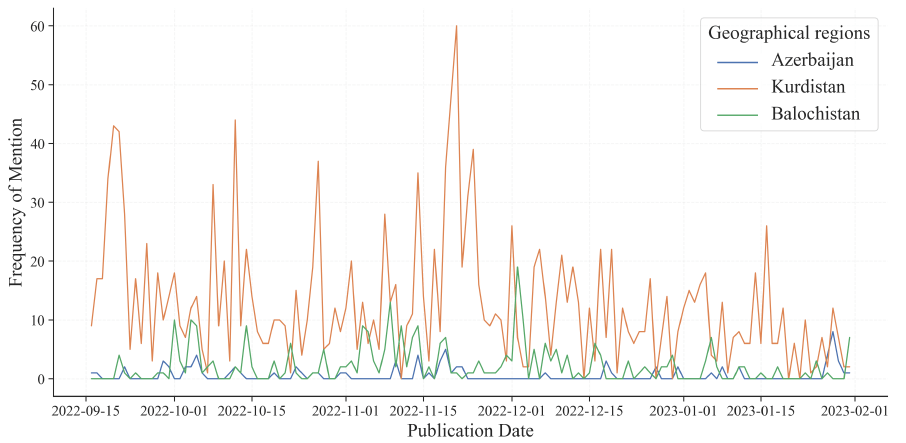
2. Mirzaei, S., Jeddi, B., Bozkurt, T., & Zarouri, S., Uneven media recognition and identity-based movement Demobilization. Political Communication. [Manuscript under peer-review].

Abstract: How does uneven media recognition affect protest participation across identity groups under authoritarian rule? While research on demobilization often highlight direct protest repression or fatigue, this article explores how exclusion in media narratives can gradually demobilize protest communities. In this article we explore the dynamics of identity-based demobilization through media representation. We trace this mechanism in the case of the 2022 Women, Life, Freedom movement in Iran, where the media played an unusually powerful role in shaping protest narratives. We constructed two original datasets: a collection of over 2,300 news articles from five major media outlets, and a manually documented list of 989 protest victims belonging to the underrepresented group. We compare protest participation on the ground with patterns of narrative recognition on media across time. The results shows that exclusion from media coverage was not incidental, but reinforced by framing patterns and diversionary narratives. We examine how identity-based erasure from media can correlate with a group’s relationship to collective action by offering a framework for understanding uneven participation in diverse movements under authoritarian conditions.
3. Mirzaei, S. Foreign Aid as Strategic Uncertainty: Donor Rents and Coup-Proofing in Aid-Dependent States.

Abstract: Foreign aid is conventionally seen as a stabilizing factor for regimes, but its political effects remain uneven across contexts. This article theorizes foreign aid not merely as material support but as an external signal that shapes perceptions of regime strength and donor commitment. In highly aid-dependent states, fluctuations in donor behavior (such as delays, suspensions, or inconsistent conditionality) can generate interpretive ambiguity among political and military elites. Rather than conveying weakness, such ambiguity may induce hesitation by making the future distributional environment harder to predict. This signaling-based uncertainty alters coup risk. The argument is tested using a cross-national dataset of aid-dependent states alongside case illustrations where donor ambiguity disrupted coup coordination. Results show that higher volatility in aid flows is associated with a lower risk of coup onset, suggesting that uncertainty in donor behavior can deter regime disruption.
 Sina Mirzaei